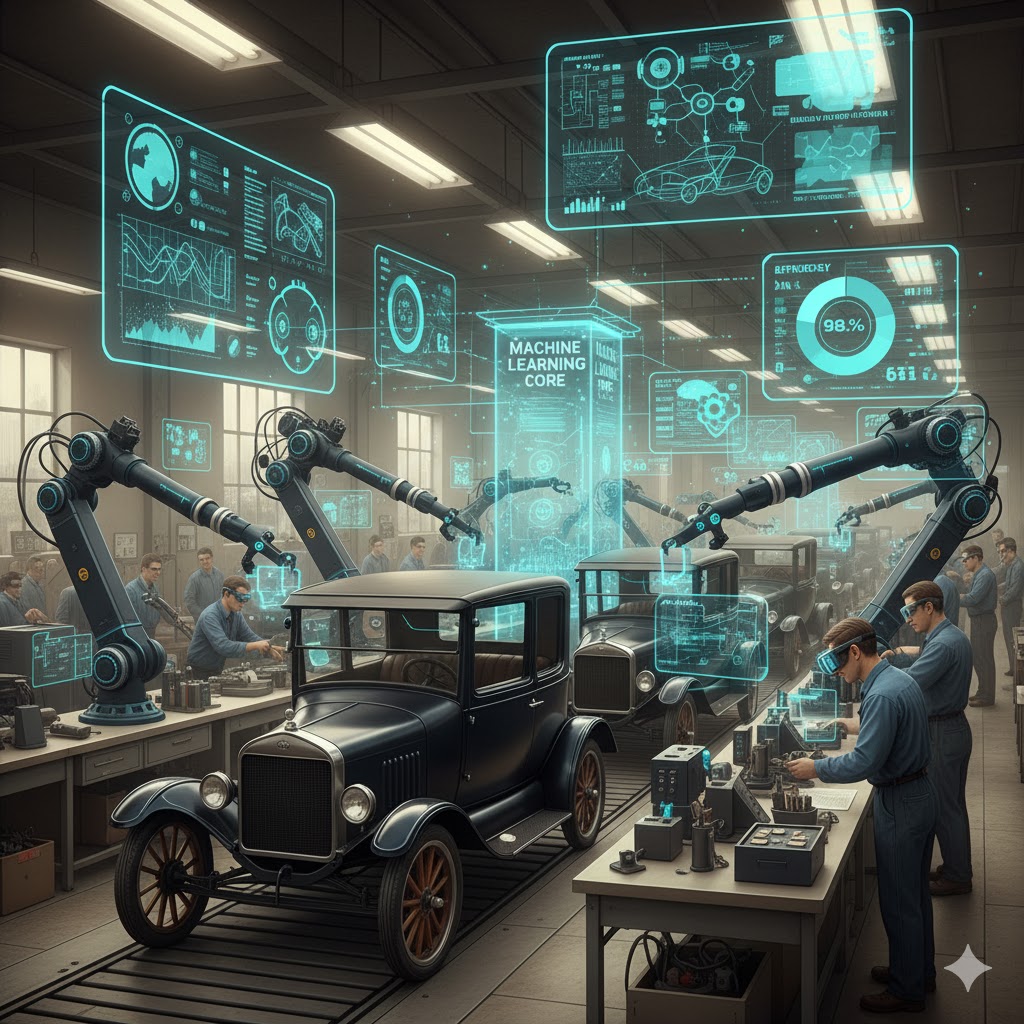
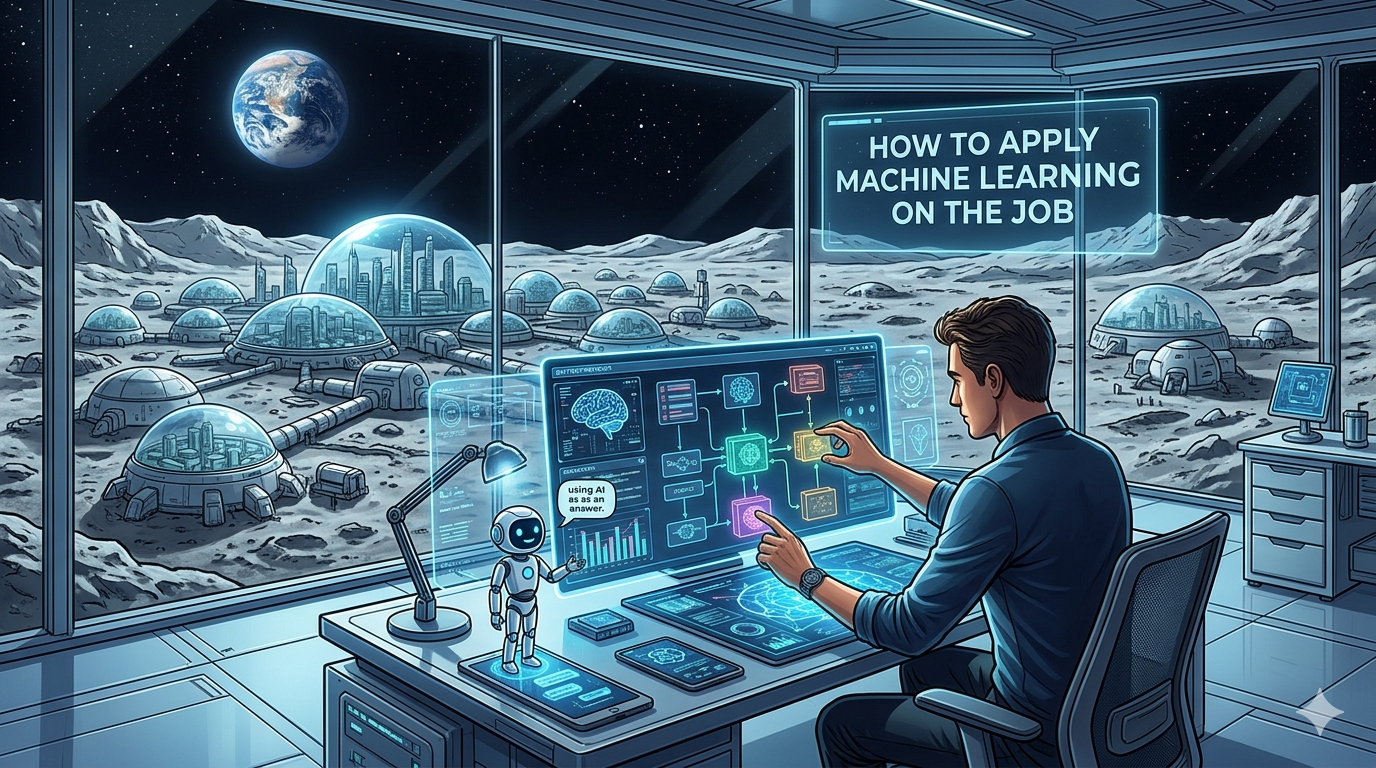
Business decisions are a matter of survival. If a business does not make the right decision on product bets, managing their budgets, what markets to focus on and countless other decision points, then they run the risk of falling by competitors, regulations, changes in customer taste and other risks. As such, whole industries are in a race to leverage the competitive advantage offered by the most exciting technology tool created, power of Artificial Intelligence (AI) and its promise of providing new business insights, cost savings, and efficiency.
Company leaders are concerned with being left behind by competitors in their application of AI and Machine Learning (ML). Thus, they are tasking to determine how they can leverage it in the workplace. Areas that were identified for potential use of AI include Chatbots that leverage natural language processing technology to assist customers through conversations in text-to-text or text-to-speech communication over the phone, helping in-house programs write code for customer account management tools and automated cybersecurity protection of computer networks.
No one ML model can offer these three use cases. For example, the cybersecurity system for protection against malware or infected emails needs supervised training to label the features of messages that pose features of risks such as misspellings or links from suspicious domains. The protection systems against viruses need to adapt to new types of AI generated spam and malware. Protection models will need to feature supervised learning data as well as reinforcement learning information in pattern suspicious messages and fine-tuning them to flag suspicious content as opposed to “good” email.
Software developers can benefit from Machine Learning models that help to write code, predicting next lines, loops or database connections to help coders save time and write secure applications. Machine Learning models built on supervised learning to statistically predict next word in large language models and natural language processing helps to automate customer services via chatbots that helps with simple account inquiries or provide a unique personal experience on account navigation -like Netflix Machine Language platform may provide a recommended list of movie titles (Netflix).
It’s possible to experience erroneous output or cultural insensitivity that may impact some customers in the use of chatbots where the training dataset that make up the domain of natural language response may tell a person to read the fine print in speech output, not realizing that the customer may have low vision disability. As pointed out in a Ted Talk on the use of Machine Learning in Healthcare, the same correct answer should apply regardless of a patient’s race (Ghassemi), likewise a correct answer should output regardless of a person’s disability status. Thus, special needs clients may find offensive responses that need to be removed from ML response tools to ensure high-empathy and null bias.
The challenges of providing access to data help to improve customer service models, retraining those models to ensure they support clients and provides the company with business insights, product development, and efficiencies to generate revenue and profits. We also face the challenge of hiring staff to manage an AI system that may have reduced the number of live operators in customer service for artificial intelligence models whose errors we need to work hard to limit.
It is interesting that we consider artificial intelligence a tool even as we witness the power of Machine Learning in reflecting how humans’ express intelligence, by making decisions, finding patterns, solving problems and other behaviors. It is great that OpenAI team believes humans are critical in the supervision of artificial intelligence to ensure that the technology evolves safely at a high level. One of the best ways to go about it is by being measurable in the quality of data we feed the models. Observations of ethical use of data are also cumulative on the small scale to ensure that AI diffuses across society and industry and ensure the problems solved by each model also include ethical and responsible decision making and execution in the algorithm.
References
“Netflix Research: Machine Learning Platform.” YouTube, uploaded by WeAreNetflix, 3 Sep. 2018, youtube.com/watch?v=VvTYuQPINec.
“How Machine Learning Enhances Healthcare | Marzyeh Ghassemi | TEDxUofTSalon.” YouTube video uploaded by TedX Talks, 19 Feb. 2021, https://www.youtube.com/watch?v=zpcOjNtd-70.